
Key takeaways
- Narrow (SP) belts transmit roughly 1.5–2× the power of the comparable classical section, from a deeper wedge that grips the groove harder.
- Existing drive → match the pulleys: replacement is not the moment to switch families.
- New drive → default to narrow: fewer belts, narrower pulleys, smaller footprint for the same power.
- Classical belts still win on legacy compatibility, very dusty/abrasive duty with frequent cheap replacement, and small light-duty drives.
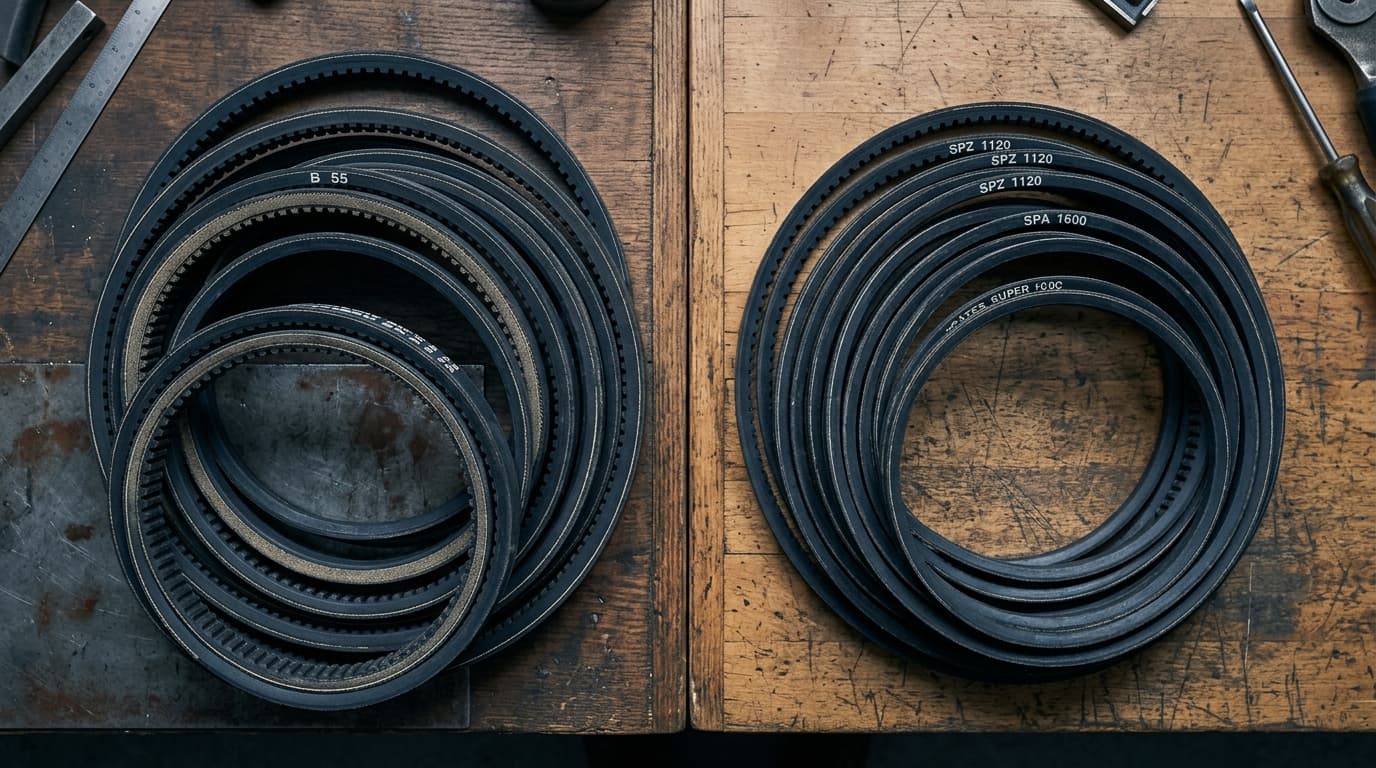
The two families, in one look
Both families are V-belts and both work by wedging into a pulley groove — the difference is proportion. A classical belt (Z, A, B, C, D) is wider than it is deep, a geometry standardised in the 1930s and still fitted to most of the installed base. A narrow or wedge belt (SPZ, SPA, SPB, SPC) trades width for depth: more sidewall in contact with the groove, more cord support, and much more power through the same top width.
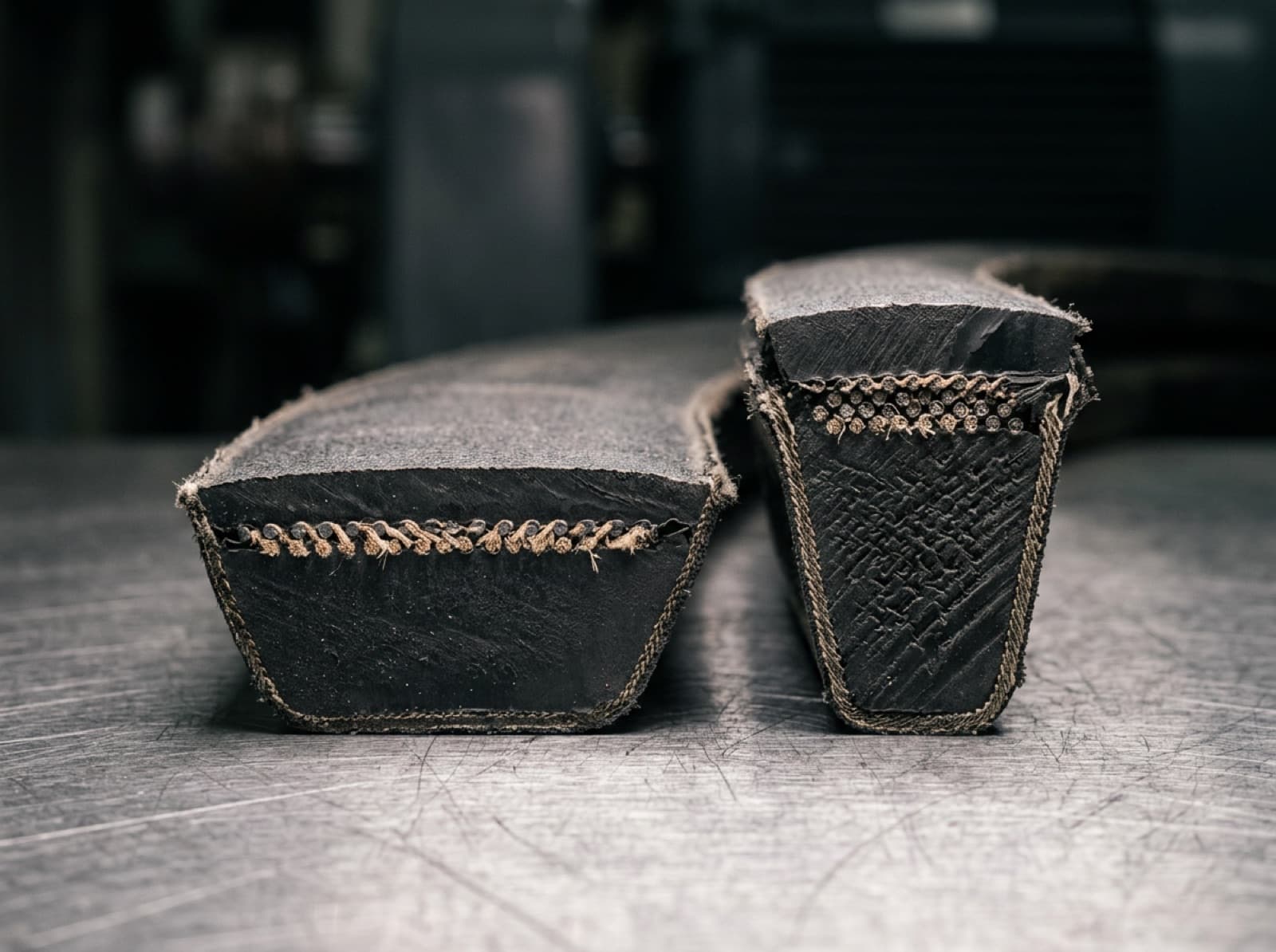
Side-by-side comparison
| Classical (Z, A, B, C, D) | Narrow / wedge (SPZ–SPC) | |
|---|---|---|
| Profile | Wide and shallow | Deep wedge (width ≈ 1.2× height) |
| Power per belt | Baseline | ≈ 1.5–2× the comparable classical section |
| Length designation | Inside length, inches (A47) | Pitch length, mm (SPB2240) |
| Standards | ISO 4184 · DIN 2215 | ISO 4184 · DIN 7753 |
| Minimum pulley size | Larger | Smaller for the same power |
| Drive footprint | Wider — more belts and grooves | Compact — fewer belts, narrower pulleys |
| Installed base | Huge (legacy machinery) | The default for modern drives |
| Best at | Like-for-like replacement, light duty | New drives, space- and efficiency-critical |
The practical differences between classical and narrow V-belts.
Power density in practice
The wedge geometry compounds: per belt, a narrow section carries what the next classical size up carries — so a drive that needs five B belts can often be rebuilt on three SPBs, on narrower pulleys, with less overhung load on the bearings.
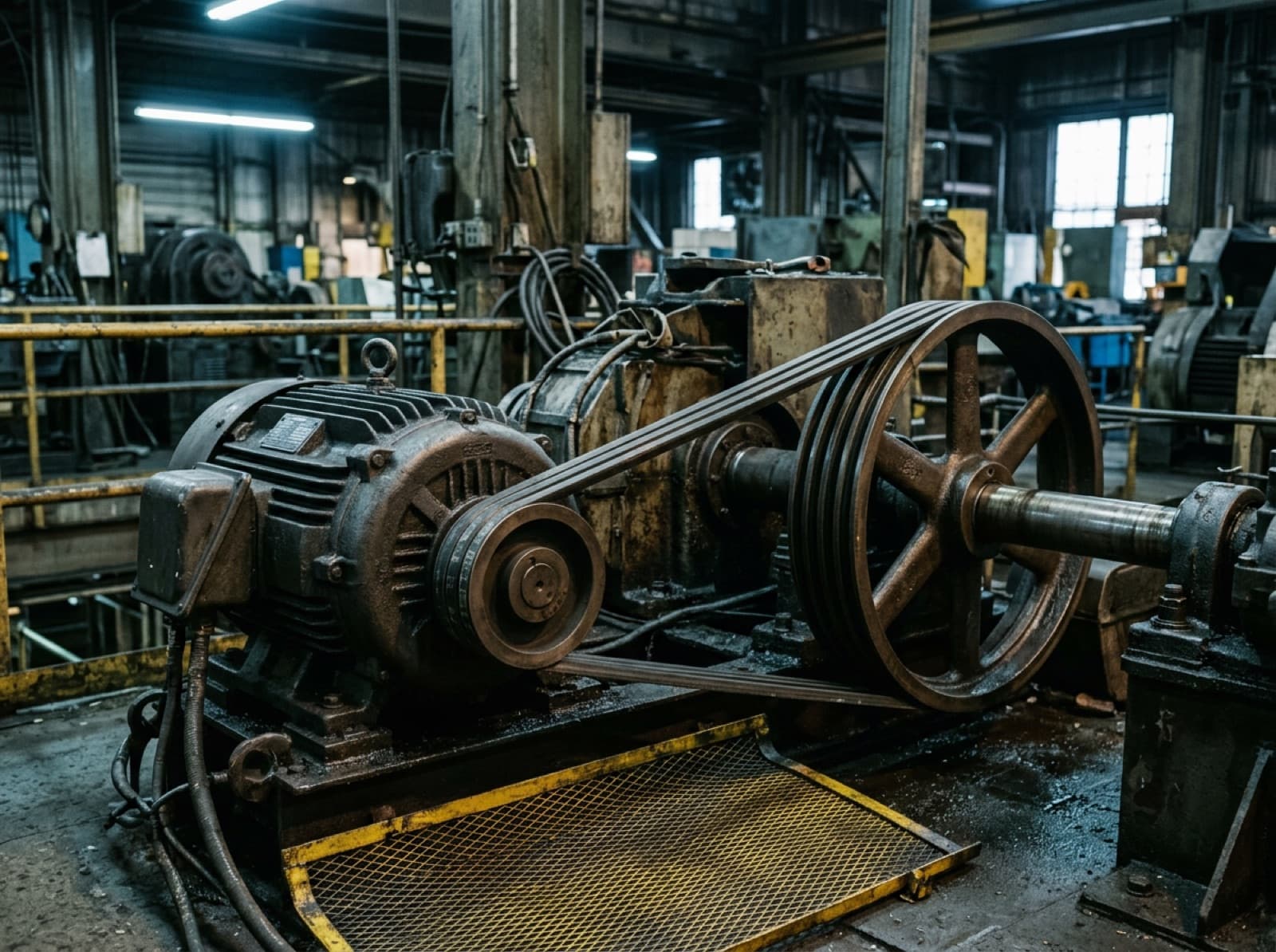
Fewer belts is a reliability feature.
The decision rules
Existing drive? Match the pulleys. The grooves are cut for one family and the families don't interchange — fit the section the drive was built for, and revisit the choice only when pulleys are due for replacement. (Worn or unreadable belt? Use the size chart guide to identify it from measurements.)
New or rebuilt drive? Default to narrow. Size the drive on SP sections and you get the same power from fewer belts, smaller pulleys and a narrower shaft assembly — the reason virtually every OEM specifies SP sections today.
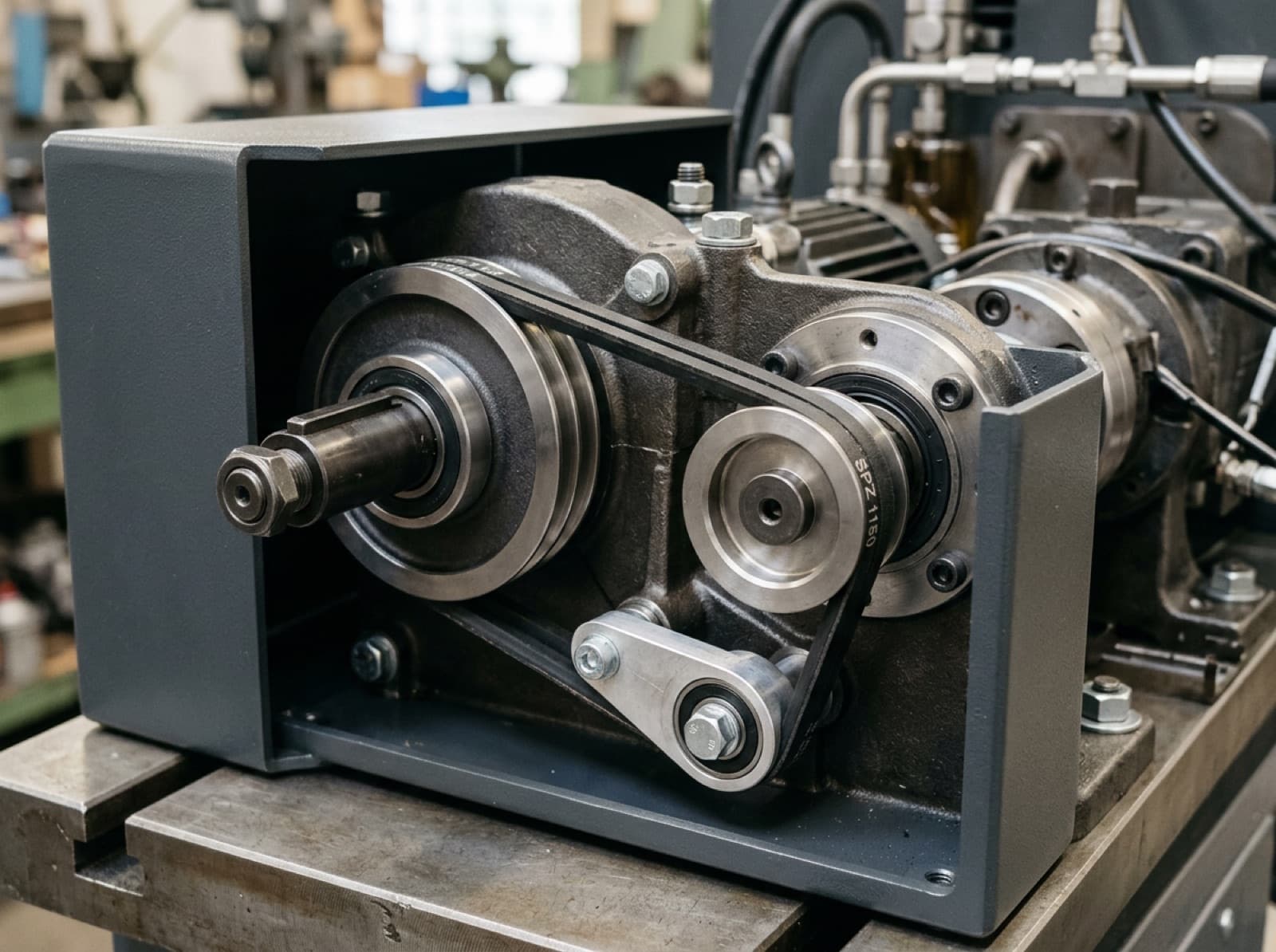
The exceptions that keep classical belts in the catalogue: light-duty drives where an A belt is already loafing, very abrasive environments where belts are treated as cheap consumables, and vibration-sensitive setups where the classical section's extra compliance is actually useful.
Where each family wins
HVAC and building services went narrow long ago — fan drives reward the compact pulleys and the efficiency gain of SPA/SPB sections running at higher speeds.
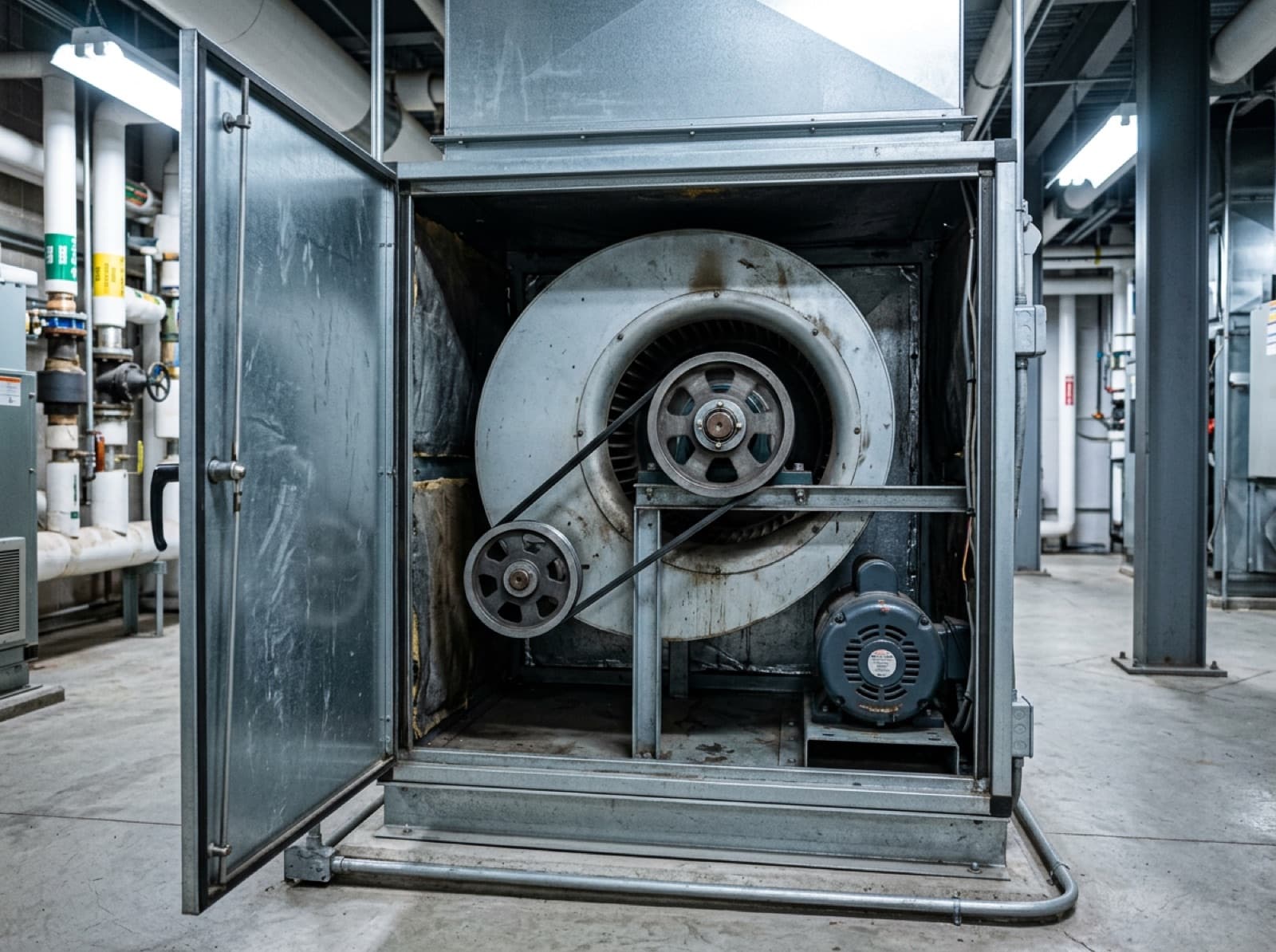
Pumps, compressors and general plant split by age: legacy machines run classical sections and should stay on them until rebuild; new installations spec narrow. Browse both ranges — Classical V-Belts and Narrow V-Belts — with Australian stock on both.

Frequently asked questions
Can I fit narrow (SP) belts on classical pulleys?
No — the groove angles and depths differ. Moving from classical to narrow belts means changing the pulleys too, which is why the switch usually happens when a drive is redesigned or a pulley is due for replacement anyway.
Are narrow V-belts more expensive?
Per belt, slightly. Per drive, usually not: a narrow section transmits roughly 1.5–2× the power of the classical section of similar top width, so drives need fewer belts and narrower (cheaper) pulleys. Total cost of a new narrow drive is typically equal or lower.
What does the SP in SPA and SPB stand for?
It comes from the German 'Schmalkeilriemen Profil' — narrow wedge belt profile — standardised in DIN 7753. The letter that follows scales the section size: SPZ, SPA, SPB, SPC in increasing order.
Which should I choose for a replacement belt?
Match what the pulleys are cut for. Replacement is not the moment to switch families — fit the same section that is stamped on the old belt or measured from the groove, and save the classical-to-narrow question for the next drive rebuild.
Sizing a drive? Tell us the duty.
Power, speeds and centre distance are enough for us to recommend the section, belt count and Mitsuboshi part numbers — classical or narrow.